Factual Truth and Securitization in Emergent Circuits of Publicity
Francis Cody
“Technopolitics of the Global South" is a modest proposal for naming an aggregator site of new and relevant research that can easily be lost in one disciplinary silo or other. This occasional series on Borderlines inaugurates an effort to connect questions regarding contemporary political forms and practice with numerous other intellectual vectors, of data and digital colonialism, computing from the South, platform imperialism, and mass mediation.
This inaugural dossier begins with introductory framings by Arvind Rajagopal and Francis Cody. This is followed by a set of reflections from Shahrukh Alam, Kajri Jain, Shubhangi Heda and Ishita Tiwary, Anustup Basu, Joyojeet Pal, and Mehak Sawhney.
States inhabiting different positions in the global architecture of colonial power are intent on limiting the contours of political publicity, often acting with a heavy hand, all while producing their own spectacles of force and versions of “truthiness.”[1] As in the case of Israel’s war on Palestine, the deployment of violence or legal threat against news media across contexts is legitimated through the rhetoric of “security,” or what Hannah Arendt once characterized as the generalization of “a kind of raison d’état state of mind.” In India, simply reporting on the violent acts of those claiming to represent the majority Hindu community regularly attracts criminal charges of “disturbing the public peace” or “promoting enmity between different groups on grounds of religion.” Muslim journalists are targeted in particular, and simply doing one’s job can even lead to incarceration under the Unlawful Activities Prevention Act, allowing the government to designate individuals as terrorists without following any formal judicial process. In the United States, President Donald Trump successfully extorted 15 million dollars from the American Broadcasting Company in a defamation lawsuit. His administration had banned the Associated Press from press conferences for not conforming to his demand to rename the Gulf of Mexico in their reporting, before being required to change course because of a court ruling. The Washington Post did not even need to be attacked in public by the president’s office before abnegating its responsibility to question power in its opinion pages. This, from the very newspaper credited with playing a major role in the downfall of Richard Nixon through its reporting on the Watergate scandal, the same paper that had recently adopted the official slogan, "Democracy Dies in Darkness.” I need hardly add that US news production has, across the board and well before Trump, played its own significant role in enabling logics of permanent war, including the genocide in Palestine, to continue unabated. US news elides basic attributions of agency in headlines when the massacres cannot be ignored altogether or simply fails to report on or give significance to the slow death of enforced starvation, euphemistically termed an Israeli “pressure tactic” by New York Times, for example.
The mass killing of journalists in Gaza is probably the most potent reminder that the contemporary security state remains hyper-aware of the stakes in reporting what Arendt terms the “factual truth.” This kind of truth, grounded in subjective experiences of real-world events, is different from the logical truth of philosophy or science. Factual truth is not to be confused with unmediated objective reality, for it “exists only to the extent that it is spoken about,” consisting of that which we as publics know to have happened through credible testimony by eyewitnesses, records, documents, and material evidence. It is very fragile in the face of political power, Arendt observes, but is also strangely recalcitrant insofar as it can never be fully replaced with opinion or lies. It is also significant that footage of mass violence in Palestine has been circulated as a projection of power over life by those perpetrating it, and not only as evidence of criminality by those whose job it is to cover it. This is a political and media dynamic that cannot be accounted for in the problematic Arendt lays out.
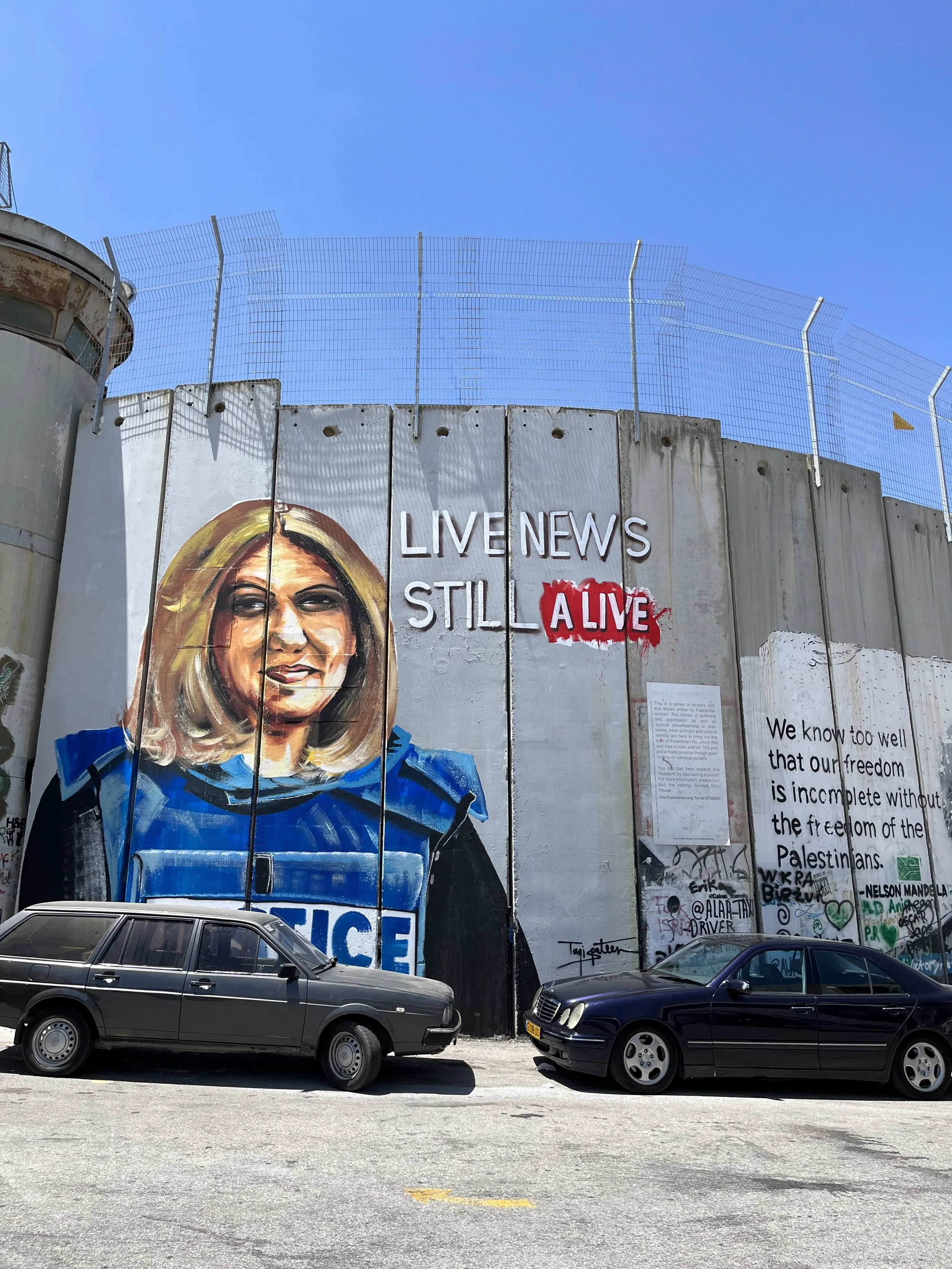
Image Credit: Dan Palraz (licensed under CC BY-SA 4.0)

All of these brazen attempts to silence factual truth, or to undermine claims that there such a thing at all, while at the very same time producing overwhelming streams of publicity in support of military and state power, suggest that the question of making events public still matters a great deal. But what does it mean to say that publicity “matters” when we are justifiably skeptical of the capacity of specific events of publicity to make any difference in geopolitics so entrenched in seemingly unshakable colonial logics grading people into the categories of more or less human? Why do professional and citizen journalists alike pursue the factual truth when the dangers of producing these types of public texts are so palpable? If the media modality of sovereign spectacle is resurgent in way Foucault could perhaps never have imagined – appearing to have overtaken the capacity of critical publicity to act as a means of supervising government power – what are we to make of the concern on the part those in power with the performative value of repression as a public act in itself?
In beginning to think through these questions, we might turn to the tradition in critical theory arguing that the culture industries deceive people into thinking they are acting in the world through the production of publicity when they are, in fact, better understood as consumers providing free labor in production of public culture. The resurgence of this type of argument is understandable when considering how, under conditions of what Jodi Dean calls “communicative capitalism,” contemporary colonial power appears impervious in the face of event after event belying its claims to representing humanity as a whole. Events can still serve as reconfiguring catalysts, but how opinion and affect continue to mediate stubborn facts that might well come back to haunt is what is of primary political concern in molding the field of possible action in the contemporary. As Thomas Keenan noted over twenty years ago, the assumption that public knowledge of atrocities gleaned through reporting would automatically lead to political action has shattered, but is not for that reason that media texts and imagery are no longer important. Many of us have moved toward paying more attention to what I have written about in The News Event as “environmental engineering” to account for how broader discursive spheres afforded by legal and material infrastructures of publicity matter, as milieu, allowing for some events to gain more traction than others in conditions of deep uncertainty. The mise-en-scène in Jain’s analysis in this forum is a perfect example of multi-modal milieu, but also the regulatory apparatus analyzed by Tiwari and Heda, Basu’s “Hindutva 2.0,” as well as the influencer effect mapped out by Pal constitute critical elements of this milieu, the production of an ecology allowing power to short-circuit long-standing institutional and technical constraints on its application. The types of leaks analyzed in Sawhney’s piece would appear to depend radically on the environment, or conditions of felicity, within which their performative effects might be said to unfold, or not.
We have also seen repeatedly how the sheer force of images can easily overcome their value in representing a factual truth that can be said to be separate from the event of representation itself, even if it is irreducibly dependent on the action of representation and communication. As Alam notes in this forum, in the time that has elapsed even since the research for The News Event took place, the distinction between the world of media and that of the judiciary has collapsed to the degree that specious news reports become grounds for judgements on the media, and the securitization of communication often makes the action of journalists themselves the culprits alleged to be “disturbing the peace.” And so, it remains important to ask why it is that publicity retains so high a value when the promises of an Enlightenment vision of the public sphere have largely evaporated, and then to assess what this aspiration means in a time when the dangers of producing critical publicity in the form of truthful representation might well be lead to death for the journalists involved.
I would like to highlight four specific points for research in this context.
First, the fact that publicity so often collapses into surveillance is a defining feature of political life but some of the ambiguous implications of this are not clear. The US state department proudly boasts of its violent crackdown on dissident thought with the aid of organizations devoted to collecting and publishing online information about those who dare question official support for Israel. And embassies abroad have been instructed to scour the social media accounts of all those applying for student visas to study in the US, in search of any material deemed harmful to government interests. The US is not alone, nor is it the first state to police capacities of citizens and non-citizens alike through such monitoring. These technologies of gathering information and correlating data in the name of securitization are being put to some political uses that some might not have expected, but the surveillance logics themselves are already part of the very infrastructure of contemporary publicity. Shoshana Zuboff, among so many others, has shown that there is no engagement with the online world without the creation of “exhaust” that forms the raw materials for a surveillance capitalism which is at the same time a medium shaping social life. We have increasingly moved, by means of the same infrastructures and capabilities to abstract “data derivatives.” from the power of nudging characteristic of online governmentality to explicitly coercive actions: both disciplinary measures in the shadows of university registration systems or tax records, for example, and sovereign-spectacular events in the public realm itself.
We might begin to reckon with our contemporary situation by acknowledging that this tight coupling of publicness and surveillance is more long-standing than commonly thought if we turn to a scholar like Simone Browne, for whom it has always been a defining feature of black life in North America. It is also worth noting, in this context, that the security state was always already a condition of the production of liberal idealizations of the public sphere. Thinking back to what is arguably the most foundational text in the European genealogy, in Kant’s answer to the question, “What is Enlightenment?” we can appreciate that the particular public/private divide he envisions emerges out of a recognition of the power of the security state to punish deviant individuals in producing the relatively faceless, anonymous world of letters, where the exercise of reason is less constrained and more generalizable. In interesting and rarely mentioned passages in his lectures on security, Foucault also notes that the Enlightenment “public” emerges as that “surface zone” through which the new human as species and population is governed abstractly through opinion, education, campaigns and convictions. The public emerges alongside and as a correlate to the violence of “raison d’état” and the problem of sedition is thus immanent to this new field of publicity itself. But if the public sphere was always already securitized, the public/private divide sustaining post-Kantian critique through Habermas and even onto his critics, is precisely what has become completely untenable.
The divide between these realms has been breached not only because of robust feminist, queer, and black radical traditions attacking its conceptual foundations. The privileges of privacy and the dangers of publicness were always differentially distributed, but our growing awareness of how oppression along lines of race, sexuality, gender or other diacritics of difference have been technologized and paradoxically re-naturalized as “data” (that which is given) have given rise both to new strategies of evasion and to new demands for accountability. New technological affordances allow subjects to reverse the gaze, as it were, mobilizing capacities for “sousveillance,” the observation and recording of state power from below its sway, if one wants to borrow from Steven Mann. Much of this work takes place through relatively inexpensive cellphones, like those used to record and circulate the videos of police brutality in the murders of Eric Garner, George Floyd and so many others, that produced focal events propelling the Black Lives Matter movement. Much more elaborate technologies and institutional support sustain a project like Forensic Architecture, which likewise turns the forensic gaze to question state violence in the juridical realm, extending into other forums, including art exhibits and academia. These examples concern counter-surveillance, but the other side of the power relation in a post-privacy world, namely evasion, remains more elusive. Tactics to render one’s self “out of sight” are defined by radically differentiated access to the technological means of such operations. The capacity to create a veil of opacity while also producing publicity is largely out of reach from anyone other than the virtuosos behind networks like Anonymous. Inequality also defines the power to circulate a counter-forensic gaze on power to any political effect in a world where proud demonstrations of violence also serve as exhibitions of impunity.
This leads me to the second point, that some form of double-consciousness shapes entry into the field of publicity for a majority although the compulsion to be recognized might be diminishing as a primary modality of power. Panopticism has clearly provided an illuminating diagram of how the gaze of the other is internalized so as to work as a mechanism of discipline all the more powerfully in an online world where the raw materials for surveillance far exceed the technologies of sight at the center of Foucault’s model. But it is the implied homogeneity of the field of power, because it is so dispersed in this understanding, that appears limiting, especially when thinking about radically uneven distributions of vulnerability to the fact that surveillance is so all pervasive. So, following especially from Amahl Bishara’s work, the Du Boisian concept of “double-consciousness” might be better situated to conceptualize not only that racialized split subjectivity that comes from being watched by and measured by the tape of an other who looks upon one with contempt, but specifically how this sensibility bears down on how publicity is produced and circulated.
In Bishara’s scholarship, we see how the power of news media to elicit responses from other actors and to produce events with significant effects for those they report on is profoundly uneven. Residents of the United States can afford ignorance of how other societies represent them, while US reporting on Israel and Palestine shapes “how Palestinians constitute themselves as a polity.” Some actors on the world stage are more keenly aware of how they will be evaluated by exterior standards than others, leading to a heightened concern with how they imagine others are reporting on them.[2] This is a concern shaping entry into the very field of publicity. The quality of public images and texts produced from this concretely situated position demonstrates hyperawareness of multiple sites of uptake and is often defined by an ethos of publicity that recognizes the very structural limits of communication while being attuned to questions of performativity and social relationality. The Al-Haq Forensic Architecture Unit in the occupied West Bank, for example, confronts experiences of violence and the demand for community-based norms of verification in testimony that often sit at odds with the very requirements of the forensic analysis and forms of publicity they have been charged with producing. On the other hand, adopting the stance of disinterested objectivity emphasizing the transfer of massages here correlates with the claim to legitimate domination.
The very plausibility of this “view from nowhere,” however, seems to be shrinking by the day. If the imagined capacity of critical publicity to serve as a vector of power within foreseeable timeframes has in fact also diminished, this concern with subalternity within a “global” field of enunciation – which might better be characterized as that of US empire on the decline – might well be less important than it once was for many producers and circulators of the image/texts making up public culture. What could be framed as a planetary “undercommons,” remains heterogeneous in its ethic of address, without feeling the corresponding weight of the other’s gaze falling upon it. The claim to factual truth remains steadfast when articulated from this “view from somewhere.” Following Arendt, for this claim to be meaningful it can only be articulated through public appearance mediated through plural experiences. But to be relatively indifferent to the politics of recognition on the “global stage” or within national frames is also to escape some of the world-defining power of differential access to the privilege of ignorance.
Third point: it’s time to revisit the securitization of affect in practices of domination through publicity. We owe to Michael Warner’s critique of the public sphere a compelling account of how, what he terms “utopias of self-abstraction” animating liberal visions of democratic publicity are seemingly allergic to displays of affect, and how they misrecognize indeterminacy of address as universality to enact power that would appear to be disinterested. It is the overly embodied other that was relegated to the zone of the passions and therefore unable to escape particularity of interest in this model. I have argued in my work on politics in southern India that this logic of self-abstraction is only one way publics have transposed their power to the level of the state. Populist publics enact power through displays of affective attachment to leaders who claim to represent the general will in many political contexts where liberalism is not as hegemonic as it was imagined to be in classical debates on publicity.
At this time, when populist publicity is globally ascendant it might make sense to move away from this earlier argument to delink from debates on liberalism, and look more closely at some of the common ground that is shared among various political formations that have, in fact, absorbed and weaponized critiques of liberalism. This includes contemporary liberalism itself, a rhetoric which toggles between claims to disinterested impartiality, on one hand, and the cynical appropriation of ideas about “safety” which are in fact calls to security measures limiting speech, on the other. The high valuation given to feeling “uncomfortable” is an instrument to censor dissent, often violently, as we have seen on our university campuses. No one questioned the veracity of news images from Al Jazeera depicting carnage and soldiers exchanging fire in Gaza projected onto the walls of my university during protests, but the event of showing them in public was considered by administration to be an offensive act.[3] The language of affect, and the uneven distribution of subject positions that can successfully appeal to this language, sit at the core, now, of this strategy of domination; even while, in the very same gesture, it is the critique of liberal imperialism that remains accused of being “uncivil” or too “hot headed,” as it were. But those claiming to represent liberal values are the not the only ones who appeal to a sense of danger and fear to police publicity. In the US, resentment against being made to feel ashamed of the nation’s racist past and present motivates a large part of public policy under Trump. In India, fact checkers who expose the violent speech of Hindu nationalist leaders on a platform like X are accused of spreading hatred themselves and making the majority community feel “unsafe,” again appealing to colonial laws designed to preserve the “public peace.”
Accusing someone of having caused hurt, making fearful, or of “disturbing the peace” such that they must be censored and reprimanded is remarkably easy to substantiate with proof. One simply has to be offended or scared as a result of some form of public expression or react in such a manner so as to show that the peace has, in fact, been disturbed. Violence on the part of communities arguing that their sentiments are hurt or that they feel unsafe as the result of a text or image often serves as evidence of the offensive, even violent nature of that image/text itself, and by extension to the violent intents of the author or publisher of that image/text in making it public. There is therefore something circular in the legislation of sentiment such that the negative effect of speech on an offended community claiming affective damage points back to, or can even sometimes be said to retroactively produce a cause in the offending party when the hurt community has established a dominant narrative frame. Majoritarianisms now, beyond their liberal figuration and not necessarily representing demographic majorities, are grounded in claims to dominance that are so fragile that any dissenting narrative or factual truth that does not support such claims appears as an existential threat. How long this bad contradiction, productive of no dialectic but reliant a great deal of cynicism, can sustain itself remains to be seen.
And finally, I’ll end with the argument that publicity in our age of digitalized sovereignty and securitization makes multiple temporal imaginaries salient. Kajri Jain has argued that the introduction of any new medium can help us see “the inertia and subtle mutations of older forms and processes, and hence circuits and turbulences between newer and older forms, or remobilizations and resignifications beyond remediation per se.” The very newness of new media has a great to do with how cultural expectations about how genre fits with communicative channel are upended, and the experience of time often lies at the center of such ferment. But there is something about convergences in the shared plane of digital mediation in particular that makes the tension or forms of dissonance among phenomena that appear to inhabit wholly incommensurable scales of duration and visions of history noticeable by all participants, and not only erudite scholars of visual culture or theorists of new media.
Seemingly forgotten pasts burst through narratives of progress in the production of a whole range of populisms that are no longer about futurity in the senses formerly attributed to that which is yet-to-come. What Elizabeth Povinelli conceptualizes as the “tense of late liberal governance,” when present arrangements are viewed from the perspective of that which will have resulted in a better future, appears to be crumbling for so many. This imagination of how possible futures legitimate necropolitics in the present is increasingly challenged by other powerful figurations of the yet-to-come. First, what we might call “the tense of late rightwing populism” in places like the US, India, and Europe figures political futures as those which will have resulted in better pasts. Unlike earlier modernist visions of domination over space and time in the production of better life on earth, the spirit of right wing populism which could never deliver in the present offers an ever-deferred promise of better histories of greatness as balm for whole demographics that have been rendered surplus in the globalization of capital. In the meantime, those few with the means look towards outer space. Consider the planetary scale of this version of “make live and let die.”
The question of “the otherwise” of this nightmare might also be refigured insofar as the politics of identity remain regnant while the promise of recognition no longer poses the threat of capture it once did. There are, in fact, already other contending narrative frameworks figuring the yet-to-come. Competing with the tense of futures providing a better past, is a persistent and longstanding, almost Benjaminian insistence on a future which might feel accountable to an apocalypse that has already occurred and remains ongoing. Black witnessing as conceptualized by Alissa V. Richardson, although powerfully thematized in work of publicity that went into the Black Lives Matter movement, is the latest iteration a much older demand for a “first-hand account of what happened in each fresh case of untimely death.” While the use of photographic evidence in efforts to hold Israel accountable for state violence is told by Rebecca Stein as a story of frustrated aspirations for justice, Bishara shows the circulation of images on social media also to “be a space for emergent intimacies for commemorating Palestinian political deaths.” The two phenomena go together. And the recent collection of essays on media in Producing Palestine all point back to the production of a territory in the face constant threats of genocidal erasure, where publicity cannot be severed from other forms of resistance. The work of factual truth remains central here: as witness, testimony, or material traces demanding forensic analysis and broader circulation despite the weakness of such forms of public representation in contemporary political “realism” at the level of the state, leaving aside the betrayal of international law. In the face of apparent futility in the unfolding now, might this work also have to do with gathering evidence for some yet-to-come when justice might look back in horror at what has unfolded in the third decade of the twenty-first century?
Endnotes
[1] This neologism is, of course, Stephen Colbert’s at once darkly comical and incisive contribution to contemporary political thought.
[2] What Alejandro Paz (n.d.) conceptualizes as “imperial publics” is the converse pole of this relation, where North Atlantic opinion feels perfectly free to debate the conditions of occupation in Palestine without repercussion.
[3] University of Toronto (Governing Council) v. Doe et al. 2024 ONSC 3755
Francis Cody is Professor in the Department of Anthropology and the Asian Institute at the University of Toronto, where he is also the Director of the Centre for South Asian Studies. He is the author of The Light of Knowledge (Cornell 2013), winner of the 2014 Edward Sapir Book Prize, and The News Event (Chicago 2023).