
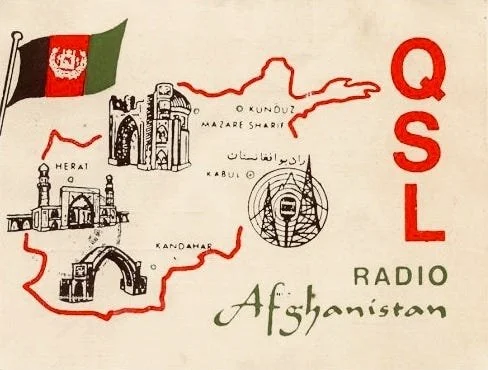
In our second conversation, we learn about the history of radio broadcasting, live performances, and resistance in Afghanistan in the 1960s and 1970s with Mejgan Massoumi.
Coming up: cassettes and mass culture in Egypt with Andrew Simon
Read More
“Revolutions enter history as extraordinary events: they mark a radical shift from an old to a new order. They are archived with turning points, famous leaders, and unequivocal ideologies. Finding this focus on the historic and the monumental blinding, I turn to ordinary people and unexceptional stories, in a memoir almost not written.”
Read More
“But to be a Black political figure in Freetown during the 1920s was nevertheless to contend with a system premised on a racial distinction between colonizer and colonized. A closer look at the Sierra Leone Weekly News gives us a sense of the precarity that existed even for elites in colonial Sierra Leone.”
Read More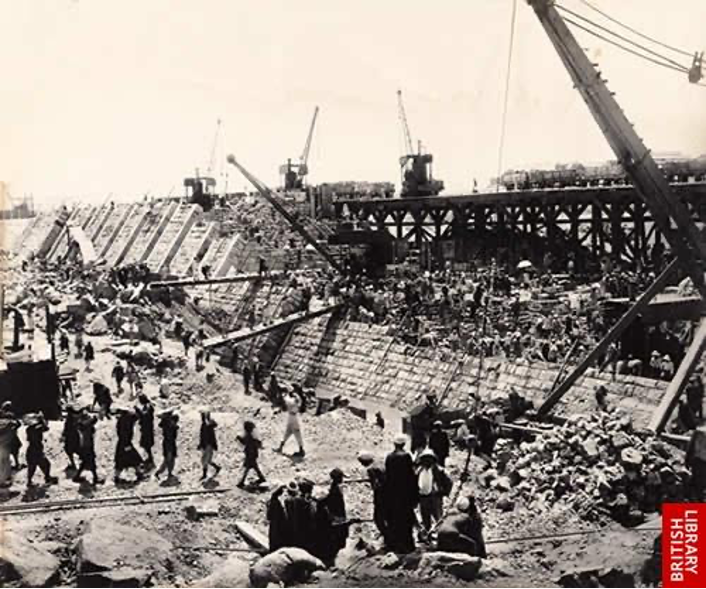
“I explore three stories that are part of this lifeworld, stories that gesture towards the visceral, stories of loss and dispossession, of hope, and of mastery—stories that come up against each other in contradictory ways.”
Read More
“The monument is always just out of reach—separated by security, nestled closely to the corridors of power, a monument to an internationalism that has also been shaped by its distance from popular struggles.”
Read More
“As dusk fell over the Costa Rican capital of San José on 20 August 1968, the evening calm was broken by the drone of air raid sirens—the sign of major breaking news. Anxious, intrigued, excited, crowds gathered at the offices of La República. The message on the newspaper’s bulletin boards outside was succinct: “Czechoslovakia invaded.” ”
Read More
“…the monster is never far from even the most hefty and technical treatments of the social relations that animate these centuries. Marx’s famous metaphor, for instance, describes capital as “dead labour, that, vampire-like, only lives by sucking living labour.” “
Read More
“Forty years after the event, Hailu Ayele recalled being arrested in Addis Ababa on suspicion of political libel. When he arrived at the police station, two colonels began their interrogation: “They started by handing me a piece of blank paper and instructing me to write ‘imperialism’ on it.” “
Read More
“In As aventuras de Ngunga, the bodies of African women form the battleground over which the MPLA’s modernity and the African chiefs’ conservatism is enacted: Ngunga has to renounce his love for the young Uassamba, the fourth wife of the village chief Chipoya.”
Read More
“Could the displaced “fruits” of its revolution today tell us something about the past? And what might the condition of absence, understood in temporal terms, mean for revolution itself?”
Read More
“As they write, “Passivity is the smothering of suffering and passion is the explosion of suffering. Passivity and passion—the ways to keep living when you’re damned, even by your own people.”(P. 153) There are no tales of ascendence, of aspiration, of striving “to be somebody” here.”
Read More
“When posters for Mohamed Pack Your Bags appeared on the walls of the foyers (employer-owned housing for migrant workers) where the play was touring in France, Algerian workers reportedly panicked, thinking far-right activists had plastered their housing quarters with anti-immigrant signage.”
Read More
Running through the book, at a level just below the surface, a constant conversation is at play: a conversation between the dispassionate reporting of a journalist, and his social location. Saha is the grandson of migrants from erstwhile East Bengal and East Pakistan whose grandmother did not make it to the NRC because, for Kafkaesque reasons, she has been marked as a “D voter” since 1997 by the Election Commission of India (D for doubtful). In a strife-ridden time and place, however dispassionately she conducts her reportage, the journalist and her creations can be reduced to who she is ethnically, linguistically, religiously.
Read More
In the first conversation of the Borderlines series History Sounds, Christopher Silver speaks about the history of the recording industry in North Africa from the colonial period through decolonization.
Coming up: Mejgan Massoumi will tell us about radio and popular culture in modern Afghanistan.
Read More
“[T]he general neglect of Melaka in historical scholarship, especially for the modern period cannot be denied. This essay responds to this neglect by attempting to fill a particular void about the social history of Melaka. It centrally locates Melaka within the Indian Ocean world by studying the ties it shared with South Asia in terms of convict transportation. Furthermore, it analyses how these inflows altered the very dynamic of the nineteenth century social landscape of Melaka.”
Read More
“And yet, the tension between these two logics is not necessarily a mis- match between two incompatible philosophies of value. For Sofia, it was more like a puzzle that challenged her and her colleagues to arrange their numbers appropriately, calculate them ethically, and organize them harmoniously. These are two different flows of ideas and preoccupations that coexist inseparably. Sofia’s job consists of giving the tension arising from their coexistence the right intensity so that their prices can stand an ethicality test, an assessment of how they will affect the lives of others.”
Read More
Professors Deborah Starr and Hanan Hammad tell us about their work on the history of Egyptian cinema, ideology, and communal relations in the twentieth century. They also discuss questions of methodology, how to find and use the new sources available today, and the importance of intellectual exchange and collaboration.
Read More
The conversation that we have captured here reflects the nuanced and thought-provoking ideas and scholarship of the participants—Banu Subramaniam, Julie Livingston, Omar Dewachi, and Sunil Amrith—who all study the body and biopolitics. Their approaches range across global histories of medicine and science, anthropology, and feminist studies of science, environmental and transnational histories of migration, and studies of war and humanitarianism, but they share a broad interest in the shifting power of the state and in consequences of capitalism.
Read More